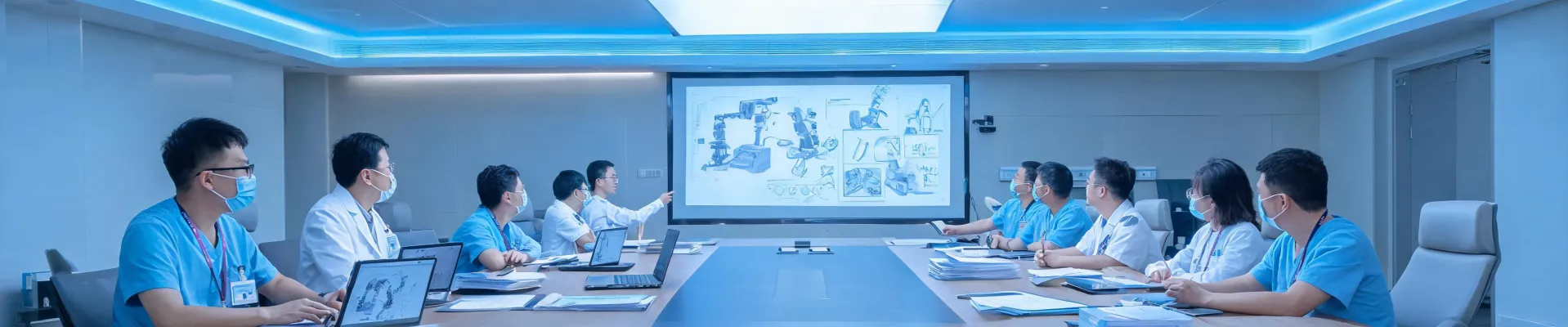
An office administrator explains why a cheap 'bulk depstech endoscope' listing wasn't worth the risk, and how choosing an endoscope camera with light from a manufacturer like Conmed—plus understanding flexible endoscope OEM vs private label—changed their procurement strategy.
It started with a cracked camera head on a Tuesday morning. Our GI clinic's oldest flexible endoscope camera had finally given up after eight years of daily use. The repair quote was $1,800—which made no sense for a unit that was already two generations behind. I needed a replacement fast, and my budget said “cheap.”
Here's the thing about being the office administrator for a 14-physician gastroenterology clinic: I handle every piece of equipment that isn't clinical, and some that are. Tack on about $820,000 in annual spend across 35 vendors, and I end up in the middle—pulled between “we need the best quality” from the clinical director and “can you watch costs?” from the practice manager. That tension defined the next two weeks.
The Search: Cheap Options, Big Promises
I started with the obvious search: “endoscope camera with light manufacturer.” The results were a mix of Chinese OEM suppliers, established brands, and a few marketplace listings that looked almost too good. One listing in particular caught my eye: a “bulk depstech endoscope” bundle. Depstech wasn't a name I knew from clinical settings—more like the consumer borescope world—but the price was wild. For less than the cost of one from a major brand, I could buy three, maybe four, with lights and screens included.
Tempting, right?
I had been through this before, though. Back in 2022, I bought a batch of surgical staplers from a no-name supplier because the price was unbeatable. They were okay for two months, then the measurements started slipping. The surgeons complained. Finance saw the return paperwork. That $300 savings turned into a $1,500 problem when we had to borrow replacements from a nearby hospital group. So I paused. I also remembered what my old procurement mentor told me: “Price is what you pay, value is what you get.” I didn't fully believe it then. It took one failed trial and one expensive lawsuit threat to change my mind.
The OEM vs. Private Label Question
While evaluating options, I had to learn the difference between a flexible endoscope OEM vs private label. An OEM, like the main medical device manufacturers, designs and manufactures to clinical standards. Private label might be the same product with a different brand, but sometimes it's a cheap clone with a nice logo. The “bulk depstech” listing seemed to be private label in the loosest sense—there was no documentation, no sterilization validation, no clinical references.
I asked the seller for sterilization data. No answer. I asked for FDA registration or CE marking. They sent me a PDF in broken English. That's when I remembered FTC guidelines (ftc.gov/business-guidance/advertising-marketing) require claims to be truthful and substantiated—and a vendor who can't provide evidence is a red flag.
It's tempting to think you can compare specs and prices side by side. But identical specs from different sources can mean completely different outcomes. A camera that produces a nice image on paper might fail after 50 autoclave cycles. The real cost isn't the invoice—it's the total cost of ownership: repair cycles, downtime, surgeon frustration.
The Unexpected Turn
I called a few established device manufacturers. One was Conmed. I'd seen the Conmed logo in our supply closet on various surgical instruments, but I hadn't really considered them for endoscopy. Their rep, Megan, didn't start with a quote. She started with a question: “What's your case mix and sterilization process?”
That caught me off guard. No one had asked that before.
She walked me through their endoscope camera with light options, including the AirSeal system—which isn't exactly a camera, but it's related pressure management tech. (Should mention: their line also includes carbon dioxide insufflation systems that integrate with the cameras. I didn't know that going in.) The quote came in at nearly double the bulk depstech bundle. But Megan also gave me a service contract, a loaner program, and on-site training. No hidden fees. No runaround.
I made the decision to go with Conmed—not because I'm loyal, but because the math worked out. The bulk option's failure rate, based on reviews and the missing documentation, would have meant two or three replacements in a year. Each replacement meant scheduling delays, staff overtime, patient rescheduling. At $700 per hourly block, one cancelled case eats up the savings.
The Numbers That Changed My Mind
Let's put it in numbers. The bulk package for four cameras, lights, and screens was $3,200. The Conmed package for two systems was $6,800. But the total cost of the cheap route over 12 months, including one repair (shipping, parts, labor) and two cancelled sessions, was roughly $5,900. The Conmed route, with a service contract covering 12 months, cost $7,400. Difference? Only $1,500. And if we needed a loaner because one of our units went down, the cheap option didn't offer one.
I'll admit: I nearly went with the cheap option anyway because the sticker price was so hard to ignore. But after five years of managing procurement, I've come to believe that the cheapest vendor is rarely the cheapest once you factor in support, reliability, and the cost of failure.
The surprise wasn't the price difference—it was how much hidden value came with the established manufacturer. Training videos for our staff. A direct line to a rep who knows our clinic. Field service engineer availability within 24 hours. Even the box was better: the Conmed logo was printed on the storage case, and it came with a serialized inspection certificate.
The Takeaway
If you're sourcing an endoscope camera with light manufacturer for your clinic, don't start with the lowest bid. Start with questions: What happens if it fails in month six? Who services it? What's the sterilization compatibility? Can you verify their claims with documents? Those are the things that determine whether your purchase saves money or produces headaches.
And if you're tempted by listings like “bulk depstech endoscope” because they're a fraction of the price, ask yourself one question: can they prove it's safe and reliable? If they can't, you're not saving money—you're deferring risk.
As for me, I still shop around. I check prices. But I run every vendor through the same vetting process: documentation, service support, total cost calculation. Conmed earned my business because they made the process smoother, not because they made the cheapest promise.
That's the rule now. Value, not price.

Jane Smith
I’m Jane Smith, a senior content writer with over 15 years of experience in the packaging and printing industry. I specialize in writing about the latest trends, technologies, and best practices in packaging design, sustainability, and printing techniques. My goal is to help businesses understand complex printing processes and design solutions that enhance both product packaging and brand visibility.